WhoSvalora.com Review : Broad Content, Thin Expertise and Mixed Signals

By Smiley
Updated Jun 6, 2026
WhoSvalora.com looks simple at first. It has categories, articles, author names, policy pages, and a clean blog-style layout. But the real question is not whether the website exists or publishes content. The better question is whether its content, author signals, category choices, and transparency are strong enough for readers to trust it beyond basic browsing.
This review looks at WhoSvalora.com as a reader would experience it: what the site claims, what it actually publishes, how deep the content goes, and whether it behaves like a focused knowledge site or a broad search-first blog.
What WhoSvalora.com Appears to Be
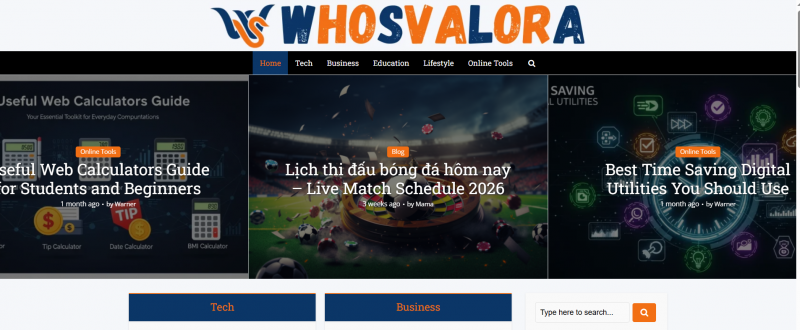
WhoSvalora.com is a general information blog covering topics such as technology, business, education, lifestyle, online tools, and general blog content. It is not a software product, social platform, professional service website, or specialist publication. Its structure is closer to a multi-niche blog built for readers searching for simple explanations.
The site presents itself as a place for easy-to-understand content. That positioning is clear from its topics: digital utilities, file conversion tools, web calculators, business growth, study tips, lifestyle guidance, online earning, personal growth, fashion, and similar beginner-level subjects. These are broad search topics, not tightly connected editorial beats.
That does not make the site useless. In fact, its simplicity may help casual readers who want quick explanations without technical language. But it also creates the first major issue: WhoSvalora wants to look like a useful knowledge hub, while its content behavior looks more like a wide SEO blog.
The First Impression: Clean Enough, But Not Very Defining
The site is not confusing to browse. The layout is simple, the categories are visible, and the articles are easy to open. A new visitor can quickly understand that this is a blog-style website. From a basic usability point of view, WhoSvalora does not feel broken or abandoned.
The problem is identity. A strong website usually tells readers what it is within seconds. WhoSvalora gives a broad answer: it covers many useful things. That sounds fine until the reader notices how wide the range is. Tech, business, education, lifestyle, online tools, football-style posts, and casino or gaming links in the recent-post area do not naturally sit under one clear editorial mission.
That mix makes the website feel less like a publication with a defined audience and more like a content container. The site can still be readable, but its purpose becomes harder to pin down.
Category Structure: Broad Reach, Weak Focus
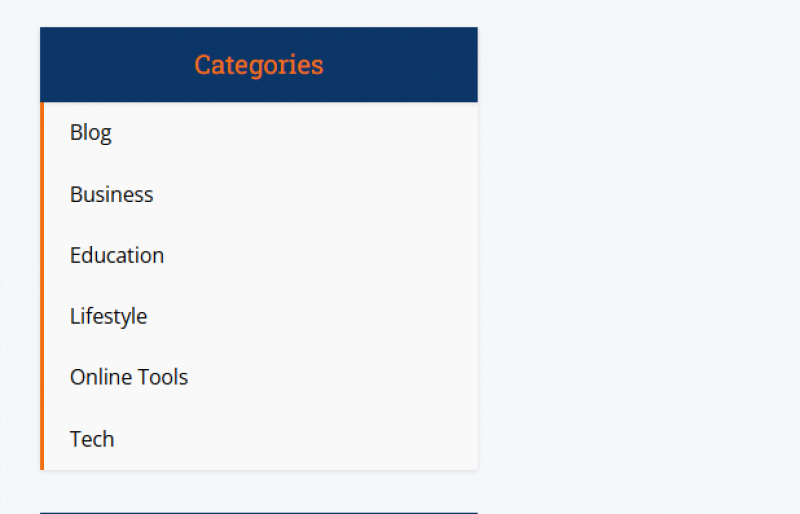
WhoSvalora’s main categories give the site a familiar blog structure. Tech and online tools suggest practical digital guides. Business suggests growth advice. Education suggests study and learning content. Lifestyle gives the site room for wellness, fashion, personal development, and everyday advice.
The issue is not the existence of these categories. Many websites cover multiple topics successfully. The issue is that WhoSvalora does not yet show the editorial depth needed to support such a wide spread.
| Category Area | What It Adds | Where It Feels Weak |
| Tech and Online Tools | Useful for simple digital explainers and utility guides | Needs testing, screenshots, privacy notes, pricing, and comparisons |
| Business | Gives beginners basic growth and planning advice | Lacks case studies, expert input, data, and practical frameworks |
| Education | Can help students with simple study and exam content | Stays close to common advice without specialist education insight |
| Lifestyle | Makes the site broader and more accessible | Can feel generic without personal experience or expert sourcing |
| Blog / Recent Posts | Allows flexible publishing | Creates category drift when unrelated topics appear together |
The broad category setup works for traffic collection, but it weakens authority. A site that covers everything needs stronger proof of editorial control. WhoSvalora currently does not show enough of that proof.
Content Style: Easy to Read, Easy to Predict
The writing style is simple, direct, and beginner-friendly. Articles usually use clear headings, short explanations, basic lists, and FAQ sections. This makes the site accessible for readers who want a quick answer.
However, the writing often feels predictable. Many posts follow the same pattern: introduce the topic, explain why it matters, break it into basic subheadings, add simple tips, then finish with FAQs. This is a common SEO article structure. It helps articles rank and scan well, but it does not automatically create strong content.
The content rarely feels investigative, experience-based, or deeply researched. It explains topics, but it does not often examine them. It gives advice, but not much evidence. It introduces tools and ideas, but usually without first-hand testing, screenshots, pricing checks, real examples, user sentiment, or comparison depth.
That makes WhoSvalora better for casual reading than serious decision-making.
Depth Check: Useful for Beginners, Thin for Serious Readers
The site’s biggest content limitation is depth. Most articles are not wrong in a visible way, but they remain at the surface. A business article may talk about goals, customers, branding, marketing, and growth. An education article may talk about schedules, revision, mock tests, and focus. A tools article may mention calculators, converters, productivity apps, or cloud storage.
These are useful starting points, but they are not enough to establish authority.
A stronger article on digital tools would test actual tools, compare use cases, explain free and paid limits, mention privacy concerns, and show which tool is better for which user. A stronger business article would include real scenarios, numbers, market examples, mistakes to avoid, and a clearer framework. A stronger education article would cite learning methods, exam psychology, study systems, or expert-backed techniques.
WhoSvalora mostly gives readers the “what” and sometimes the “why.” It does not often go far enough into the “how exactly,” “what evidence supports this,” or “what should the reader avoid.”
Author Profile: A Name Is Present, But Authority Is Thin
One of the most important trust signals on WhoSvalora is the author setup. Warner appears as a visible author across many posts. That is better than anonymous publishing because readers at least see a name attached to the content.
But the profile does not go far enough. A strong author profile usually includes a full identity, professional background, subject expertise, verified social links, previous work, or a clear reason the author is qualified to cover specific topics. WhoSvalora’s author signal feels more general than expert-led.
The concern is not that one person writes many articles. Single-author blogs can be excellent when the author has a clear niche, strong expertise, and consistent depth. The concern here is that the same author identity appears across a wide mix of subjects, while the profile does not show enough expertise to support all of those areas.
When a site covers business, tech, education, lifestyle, tools, and gaming-adjacent topics, readers need more than a broad creator bio. They need credibility.
The Write For Us Signal Changes the Reading
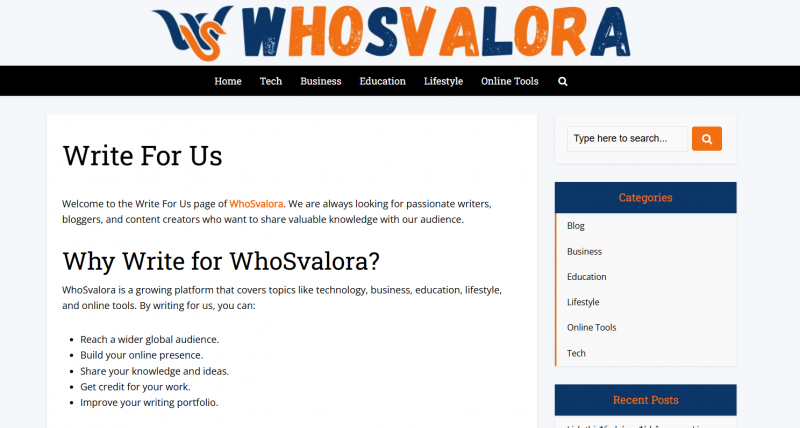
WhoSvalora clearly has a Write For Us pathway and its contact messaging appears open to guest posts, promotions, partnerships, and collaborations. This is an important part of the review because it changes how the site should be evaluated.
A Write For Us page is not automatically a red flag. Many legitimate publications accept outside contributors. But a credible contributor model usually comes with visible editorial standards. Readers should be able to see what type of content is accepted, how guest posts are reviewed, whether sponsored posts are labeled, what link rules apply, and whether authors need subject expertise.
Without those visible guardrails, a Write For Us section can make a site look guest-post-friendly or link-building-oriented. That matters because the reader may not know whether a post is independent editorial content, contributed content, promotional content, or search-targeted filler.
This is one of the clearest signs that WhoSvalora behaves more like a search-first content site than a tightly managed editorial publication.
Website Claim vs Reader Reality
WhoSvalora’s public positioning is clean. It wants to be seen as a simple, helpful, and trustworthy knowledge website. The reader experience is more complicated.
| Website Claim | What Readers Actually See |
| A simple knowledge website | True, but the simplicity often comes with limited depth |
| Useful content across categories | True, but the categories are very broad and loosely connected |
| A trusted source | Basic trust pages exist, but strong evidence of trust is limited |
| Helpful digital and learning content | Partly true, especially for beginners |
| Human-authored content | Author names appear, but credentials are thin |
| Open communication | Contact options exist, but guest post and promotion signals raise editorial questions |
The gap is not that the site claims one thing and does the opposite. The gap is that the site claims a level of usefulness and trust that its current editorial structure does not fully prove.
Trust and Transparency: Basic, But Not Strong
WhoSvalora has some basic transparency elements. It has an About page, Contact page, Privacy Policy, Terms and Conditions, Disclaimer, author names, visible categories, and a Write For Us section. These are positive signals because the site is not completely anonymous.
But the deeper trust signals are weak. The site does not clearly show ownership details, a serious editorial policy, a fact-checking process, a corrections policy, source standards, contributor guidelines, or sponsored-content disclosure practices. For a small casual blog, that may not matter much. For a website claiming to guide readers across multiple categories, it matters a lot.
The contact email also does not feel like a strong professional editorial signal. A branded editorial email would create more confidence than a generic Gmail-style contact, especially when the site is also open to guest posts and promotions.
The result is a site that is visible but not fully accountable.
E-E-A-T Analysis
WhoSvalora has some basic E-E-A-T foundations, but the overall signal is weak to moderate.
| E-E-A-T Area | Assessment | Reason |
| Experience | Low | Articles do not strongly show first-hand testing, personal use, screenshots, or original observations |
| Expertise | Low | The author profile is broad and does not prove subject-specific knowledge |
| Authoritativeness | Low to moderate | The site is active, but it does not have a strong niche identity or visible reputation signals |
| Trustworthiness | Low to moderate | Basic pages exist, but editorial standards, sourcing, ownership, and disclosures are thin |
The site does not need to become a major publication overnight. But if it wants to be treated as a reliable knowledge source, it needs stronger E-E-A-T signals. That means better author pages, clearer sourcing, visible editorial rules, tighter categories, and more original analysis.
The Casino and Gaming Link Issue

The presence of casino or gaming links in the recent-post area is worth noting because it affects category consistency. Gaming itself is not a problem. Casino-adjacent content, however, requires more careful handling because it carries trust, safety, and responsible-use concerns.
If a site presents itself around tech, business, education, lifestyle, and online tools, but recent posts include casino or gambling-adjacent links, readers may question the editorial direction. It makes the site feel more opportunistic and search-led.
This does not prove anything improper by itself. But it does support the broader pattern: WhoSvalora appears to publish across whatever topics may attract traffic, rather than staying within one strong editorial lane.
Strengths and Limitations
| Strengths | Limitations |
| Simple language makes articles easy for beginners to understand | Content often stays surface-level and lacks deeper analysis |
| Clean blog layout makes navigation straightforward | The website identity is broad and not tightly defined |
| Basic pages like About, Contact, policies, and Disclaimer are present | Ownership, editorial process, and fact-checking standards are not clear |
| Author names appear on posts | Author credentials and subject expertise are not strongly shown |
| Covers useful everyday topics | Topic spread feels search-first and inconsistent |
| Good for quick introductions | Not strong enough for expert-level or high-stakes decisions |
| Write For Us section makes contribution possible | Guest post and promotion openness needs clearer disclosure rules |
Who May Find WhoSvalora Useful
WhoSvalora can be useful for readers who want quick beginner explanations. Someone looking for simple study tips, basic business ideas, online utility suggestions, or easy lifestyle advice may find the content readable enough.
The site works best when the reader only needs a starting point. It is not the kind of source that should be used alone for complex decisions, professional guidance, financial judgment, health choices, legal issues, or serious tool selection.
In simple terms, WhoSvalora is more useful as a light explainer blog than as a trusted authority source.
Who Should Be Careful
Readers should be more careful when a topic requires evidence, expertise, or professional judgment. Business, education, finance, health, legal, and product recommendation content should ideally come from sources with clear credentials, strong citations, real testing, and editorial accountability.
WhoSvalora does not currently show enough of those signals. Its content may be readable, but readability is not the same as reliability.
Readers should also pay attention to contributed or promotional content signals. If a site is open to guest posts and promotions, it becomes more important to check whether posts are labeled clearly and whether links are editorially justified.
Final Verdict
WhoSvalora.com is a simple, active, and readable general blog, but it is not yet a strong authority website. Its biggest strength is accessibility. Its biggest weakness is credibility depth.
The site publishes beginner-friendly content across several categories, but the broad topic mix, thin author profile, visible Write For Us pathway, limited sourcing, and mixed recent-post behavior make it feel search-first rather than expert-led. It is not fair to dismiss the site completely, because it does provide basic information in an easy format. But it is also not fair to treat it as a highly trusted source without stronger proof.
The most accurate verdict is this: WhoSvalora.com is useful for light reading and quick introductions, but readers should approach its content with caution when accuracy, expertise, or decision-making matters. The site has the foundation of a content blog, but it still needs stronger transparency, better sourcing, tighter editorial focus, and more credible author signals before it can fully support its trust-focused positioning.

_1781527674.jpg)