Mirami Chat Review: The Real Experience Behind Its “Verified Girls” Video Chat Promise

By Smiley
Updated Jun 10, 2026
Mirami Chat is built around a simple but powerful promise: open the app, start a random video chat, and connect with women through live one-on-one calls. For users tired of open random chat platforms where the next match could be anyone, Mirami offers a more controlled version of the same idea.
That promise is also why Mirami needs a closer review. This is not just another video chat app. It sits between random chat, dating-style discovery, paid social entertainment, and adult video interaction. A basic feature list does not explain the real user experience. The more useful question is whether Mirami gives users enough trust, pricing clarity, and safety transparency before they spend time or money.
Based on its app-store presence, official claims, third-party analytics, and public user feedback, Mirami is best understood as a gender-focused random video chat platform with paid social-entertainment mechanics. It may work for adults who treat it casually, but it is not the same as a serious dating app, a fully free Omegle replacement, or an AI chatbot platform.
Mirami Chat in One Look
| Review Area | What It Shows |
| App category | Random video chat and social discovery |
| Core promise | Men can connect with women through live video chat |
| Platform type | Web and Android app |
| Google Play signal | 18+ rating, in-app purchases, 10L+ downloads, and a visible 2.8-star rating in the India listing |
| AppBrain signal | 3.96/5 from around 5.1K ratings, 2.6M total downloads, and high maturity rating |
| Pricing model | Free to download, with optional in-app purchases |
| Main selling point | “Real and verified” girls |
| Main concern | Verification clarity, paid interaction, fake-feeling profiles, and support complaints |
| Best use case | Casual adult video entertainment |
| Weakest fit | Serious dating, fully free chatting, or privacy-sensitive users |
The numbers show that Mirami is not an unknown app with no activity. It has public app-store presence, real download volume, and enough user interest to be discussed seriously. But the ratings also show a mixed experience. Mirami appears to be one of those platforms that can be active and appealing while still leaving many users frustrated.
What Mirami Chat Actually Is
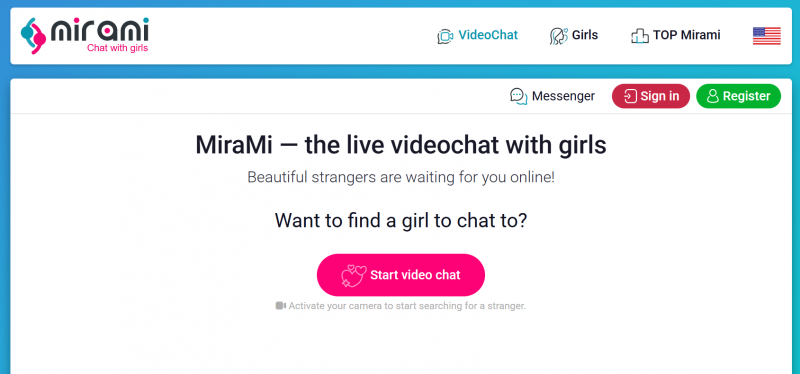
Mirami Chat is not an AI companion app. It is not like Character.AI, Talkie AI, Janitor AI, CrushOn AI, or other platforms where users knowingly chat with fictional AI characters. Mirami presents itself as a live video chat roulette platform where real people connect through webcam conversations.
It is also not a traditional dating app. There are no deep compatibility tools, long profile sections, personality tests, or serious relationship filters. Mirami is closer to Omegle, Chatroulette, OmeTV, Monkey, CooMeet, LuckyCrush, and Chatrandom, but with a much stronger male-to-female matching angle.
That distinction matters. Dating apps sell choice, profiles, and long-term discovery. Random video chat apps sell immediacy. Mirami sells immediacy with a gender promise attached to it. That makes the app feel more like paid social entertainment than normal dating.
The Real Product Is Not Just Video Chat
On the surface, Mirami looks like a simple video chat tool. In practice, the real product is controlled access. The app tries to reduce the chaos of traditional stranger-chat platforms by promising a specific type of match.
A standard random video platform usually says, “Meet strangers.” Mirami’s pitch is closer to, “Meet women through private video chat, with a verified-user promise.” That difference changes expectations completely.
A user entering Chatroulette expects randomness. A user entering Mirami expects a more curated experience: female matches, fewer irrelevant connections, and some level of authenticity. When Mirami delivers that, it can feel more focused than open random chat sites. When it does not, the disappointment is stronger because the promise is so specific.
That is the core of Mirami’s review. Its biggest strength and biggest risk are the same thing. The “verified girls” positioning makes it stand out, but it also puts pressure on the platform to explain verification, moderation, pricing, and user interaction more clearly.
How the Mirami Workflow Feels
Mirami is built for fast entry. Users do not come here to create a detailed dating profile or spend time setting preferences. They come to start a live conversation quickly.
The workflow is simple. You open the app or site, allow camera and microphone access, start the video chat, and wait for a match. Once connected, you can talk, skip, continue, add someone, check recent chats, send gifts, or make direct calls.
| Stage | What Happens | Review Perspective |
| Entry | User opens the app or website | Fast access is a strength |
| Permission | Camera and microphone access are required | Privacy risk begins immediately |
| Matching | The app searches for a video connection | The gender promise shapes expectations |
| Live chat | One-on-one video conversation starts | Experience depends heavily on match quality |
| Engagement | User may continue, skip, add friend, or send gifts | Monetization can enter quickly |
| Return interaction | Direct calls and history make chats less temporary | Useful, but likely tied to spending behavior |
A good video chat app makes this flow feel natural. A weak one makes users feel pushed from free curiosity into paid interaction too quickly. Mirami’s public feedback suggests both experiences exist, depending on the session and user expectations.
The “Verified Girls” Claim Is the Review’s Center
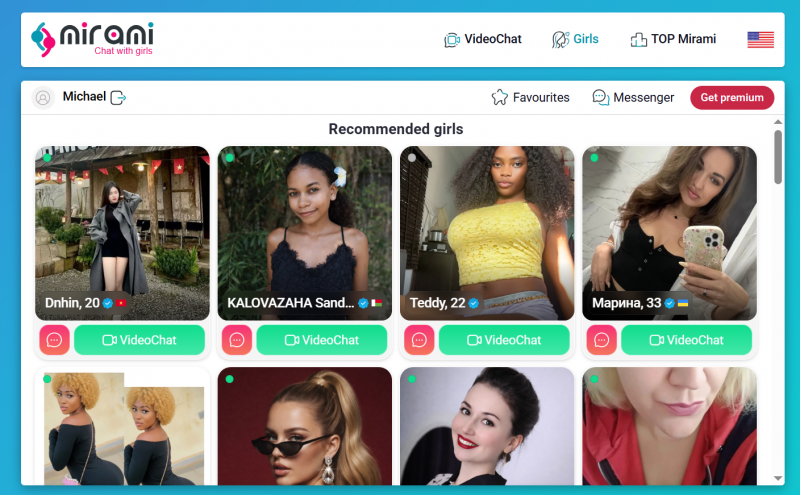
Mirami’s strongest marketing line is that the girls are real and verified. In a category where users worry about bots, fake accounts, spam, and scripted interactions, that is a powerful claim.
But verification is not one fixed thing. It can mean a profile check, camera review, anti-bot screening, basic moderation, identity verification, or something lighter. Unless a platform explains the process clearly, users cannot know how strong that verification really is.
Mirami’s public material does not explain the verification standard in enough detail. That does not automatically mean the claim is false. It means the claim is incomplete from a trust perspective.
This matters because users often judge the platform by how natural the interaction feels. A video call can be technically real while still feeling commercial, scripted, or gift-driven. There is a difference between “not a bot” and “a normal social interaction.” Mirami’s challenge is that users are judging both at once.
The fair view is this: Mirami is not built like a chatbot app, and it presents itself as live person-to-person video chat. But its “verified girls” claim should not be treated as a full guarantee of authenticity, safety, or romantic intent.
Features That Actually Matter
Mirami’s feature set is not complicated, but each feature affects the experience in a specific way.
Live video chat is the core. It creates a stronger sense of presence than text messaging because users can see and hear the other person instantly. At the same time, it increases privacy risk because live video reveals more personal information than a normal chat window.
Gender-focused matching is the main differentiator. Many random chat platforms offer filters, but Mirami puts the male-to-female connection idea at the center. For users who want that, it feels more direct. For users who want broader social discovery, it may feel narrow.
Auto-translation adds real value. Random video chat becomes more useful when language does not immediately end the conversation. If users connect across countries, translation helps keep the interaction going.
Friends, chat history, catalog-style browsing, and direct calls move Mirami away from pure randomness. These features make it possible to reconnect with people instead of losing every match after one session. But they also make the platform easier to monetize because reconnecting with a specific person often becomes more valuable than random matching.
Gifts are the most sensitive feature. On paper, virtual gifts are common in live social apps. In practice, they can change the tone of the platform. If gifts remain optional, they add interaction. If they become central to conversations, users may feel they are paying for attention rather than meeting people naturally.
What Real Users Seem to Like
The positive side of Mirami is easy to understand. Users who like the app usually respond to its speed, simplicity, and focused matching promise.
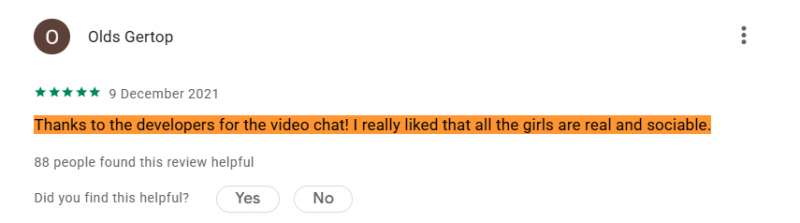
The app does not ask users to work hard before starting. That matters in this category. People who download random video chat apps usually want instant interaction, and Mirami gives them a direct path into that experience.
The second positive is clarity. Mirami knows what it is selling. It is not trying to be a professional networking tool, a broad social network, or a serious dating platform. It is built for adults who want video-first social discovery with a gender-focused matching system.

The third positive is structure. Translation, direct calls, recent chats, gifts, and friend-style features make Mirami feel more developed than a bare-bones roulette site. For some users, that makes the app less disposable than platforms where every connection disappears after one skip.
These positives explain why Mirami continues to attract users despite complaints. The concept is strong. The real issue is whether the experience feels fair, transparent, and worth paying for.
What Users Complain About
The negative feedback around Mirami follows a clear pattern. Users do not only complain that the app is bad. They complain about specific parts of the experience.
Common complaints include fake-feeling profiles, scripted conversations, gift pressure, short free access, paid features becoming necessary, crashes, unstable performance, and weak support. These complaints matter because they target the exact areas Mirami must get right.

If an app promises verified female matches, users will judge authenticity more harshly. If an app includes gifts and premium features, users will judge pricing pressure more harshly. If an app is video-first, users will judge crashes and lag more harshly.

A text app can survive small bugs. A video chat app cannot. If calls disconnect or feel unstable, the product loses its main value. The same applies to trust. A normal social app can survive weak profiles. A “verified girls” app cannot afford too many interactions that feel scripted or commercial.
The complaints do not prove every interaction is fake. They do show that Mirami has a credibility challenge. Its review problem is not only technical. It is about user confidence.
Pricing: The Real Question Is Not “Is It Free?”
Mirami is free to download, and its official site says basic features are available at no cost. But that does not mean the full experience is free. The app includes in-app purchases, and features such as gifts, direct calls, premium access, and enhanced interaction suggest a monetized social-video model.
This is normal for the category, but it needs to be understood before use. Apps like Mirami often follow a “free entry, paid depth” structure. Users can enter easily, but the more valuable interactions may cost money.
This is where frustration often begins. A user may see a free download and expect a free random chat app. But once the experience becomes more interesting, the app may introduce spending through gifts, time, direct calls, or premium features.
The honest pricing verdict is simple: Mirami should be treated as a paid entertainment app from the start. Free access may be enough to test the interface, but users expecting repeated meaningful chats without spending may be disappointed.
Safety and Privacy: The Risk Is Built Into the Category
Mirami operates in a category where privacy risk is part of the product. Live stranger-video chat means sharing your face, voice, background, and behavior with someone you do not know.
Even if a platform says chats are private, users should not assume full control. The other person may record the screen, take screenshots, ask for private contact details, push external links, or move the conversation to another app. These risks exist across random video chat platforms, not only Mirami.
The adult rating also matters. Mirami is not a children’s chat app and should not be treated as safe for minors. Its positioning, live video format, and stranger-matching model make it suitable only for adults who understand the risks.
Users should follow a few strict rules:
- Do not share your address, workplace, school, phone number, financial details, or identity documents.
- Do not send money or gifts because someone pressures you.
- Do not assume a verified profile means a trustworthy person.
- Do not move to WhatsApp, Telegram, or external links too quickly.
- Use block and report features immediately if a chat feels uncomfortable.
- Keep your background clean and avoid showing private information on camera.
- Treat every video call as something that could be recorded.
This is not meant to scare users away. It is meant to set realistic expectations. Mirami may be entertaining, but it is not a low-risk app.
Mirami Chat Alternatives
Mirami is not the only platform in this space. The right alternative depends on what the user actually wants: open random chat, gender-filtered video matching, moderated video calls, or a more dating-style experience.
| Alternative | Best For | How It Compares With Mirami |
| OmeTV | General random video chat | Broader and less gender-focused, but may feel more chaotic |
| Monkey | Fast casual video chat with a social feel | More youth-culture and social discovery focused, but safety expectations should still be careful |
| Chatroulette | Classic random webcam roulette | More open and unpredictable, with less of Mirami’s curated female-match positioning |
| Chatrandom | Random video chat with filters | Offers broader random chat options, but the experience depends heavily on filters and moderation |
| CooMeet | Male-to-female video chat | Closer to Mirami’s positioning, often seen as a more premium gender-matched chat model |
| LuckyCrush | Random male-female video chat | Similar gender-pairing concept, but also strongly monetized |
| Emerald Chat | Cleaner random chat community feel | Better fit for users who want conversation over paid attention |
| Bazoocam | Simple browser-based random chat | More basic and old-school, but less polished than newer video chat apps |
The main reason to choose Mirami over these alternatives is its direct male-to-female video chat positioning with extra social features like translation, gifts, history, and direct calls. The main reason to avoid it is the same concern that applies to many apps in this category: once a platform promises curated access, pricing pressure and authenticity questions become more important.
Users who want a free and chaotic random chat experience may prefer OmeTV, Chatroulette, or Bazoocam. Users who want a more gender-paired video model may compare Mirami with CooMeet or LuckyCrush. Users who care more about conversation quality than the gender-match promise may find Emerald Chat more suitable.
Is Mirami Chat Real or Fake?
The cleanest answer is: Mirami is a real app with real platform activity, but the experience may not feel fully organic to every user.
It is real in the sense that it has a Google Play listing, active downloads, app analytics, a working website, and public reviews. It is not simply a fake landing page or an AI chatbot pretending to be video chat.
But “real app” and “fully trustworthy experience” are not the same thing. Complaints about scripted-feeling conversations, gift pressure, and fake profiles should not be ignored. Those complaints matter more because Mirami’s own marketing depends heavily on authenticity.
So the better answer is layered. Mirami appears to be a real video chat platform, but users should test it carefully, avoid early spending, and not assume every interaction is natural just because the app uses video.
Who Mirami Is Actually For
Mirami is for adults who want quick, casual, video-first social interaction and understand that the platform may involve spending. It is best suited for users who treat it as entertainment, not as a serious relationship tool.
It may work for someone who wants to casually talk with people from different countries, try live video chat, use translation, and maybe reconnect with users they like. It may also appeal to users who specifically want gender-filtered matching rather than open random chat.
But it is not for users who want a serious dating app, deep identity verification, fully free use, or a low-risk private environment. It is also not ideal for users who are easily pressured into spending on gifts or premium features.
What Mirami Gets Right and Where It Falls Short
Mirami’s biggest strength is clarity. It focuses on a specific problem in open random chat sites: users often get too many irrelevant matches. By centering the experience around male-to-female video connection, Mirami gives users a more direct reason to try it.
What Mirami does well:
- It has a clear gender-focused video chat concept.
- It makes starting a live conversation fast and simple.
- Translation helps users chat with people from different countries.
- Friends, recent chats, and direct calls make the experience less temporary.
- Gifts and catalog-style features give the app a more complete social-video feel.
Where Mirami falls short:
- It does not clearly explain how “verified girls” are actually verified.
- The pricing experience can feel unclear once gifts, calls, or premium features appear.
- Some users may feel the free experience is too limited.
- Fake-feeling or gift-focused conversations can damage trust quickly.
- Moderation, complaint handling, and support transparency need more clarity.
Overall, Mirami feels more structured than a basic browser roulette site, but its biggest challenge is trust. In a live video chat app, users are not only judging whether the call connects. They are judging whether the person, pricing, and platform behavior feel genuine.
Final Verdict
Mirami Chat is not just a basic random video chat app. It is a gender-focused video entertainment platform built around faster access to female video matches, with extra features like translation, gifts, friends, chat history, and direct calling. That gives it a clearer identity than many Omegle-style alternatives, but it also raises bigger questions around verification, pricing, and how natural the interactions feel.
The app has real activity and a clear product direction, but its “verified female video chat” promise needs careful reading. Mirami may be worth testing for adults who want quick live video chats and understand the paid entertainment model. However, users looking for serious dating, deep verification, transparent pricing, or a mostly free random chat experience may find it limited or frustrating.

_1781527674.jpg)