Charlie Kirk’s Smile : The Politics, Reaction, and Story Behind the Viral Attention

By Smiley
Updated Jun 11, 2026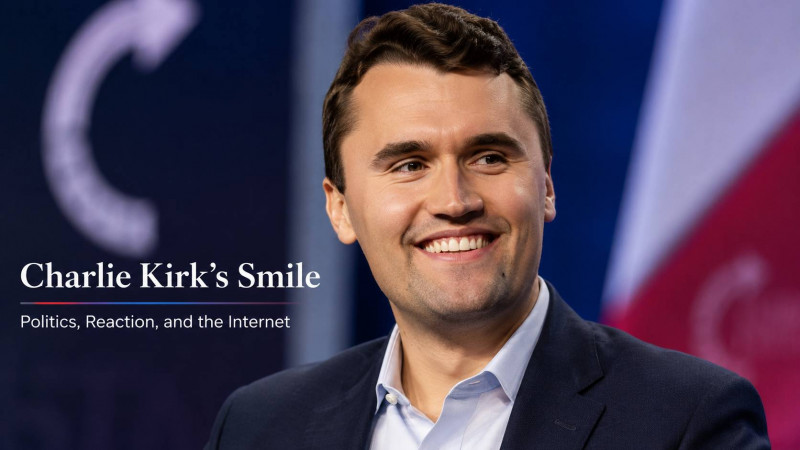
Charlie Kirk’s smile became more than a viral meme after viewers connected it to his debate style, political image, and online persona. This article explains why the smile got attention, what supporters and critics saw in it, and how social media reshaped the story. It looks beyond surface-level mockery to explore politics, body language, meme culture, and public perception. A balanced review of how one expression became a symbol in internet politics.
Charlie Kirk’s smile became a talking point because people were never looking at it as just a smile. They were looking at a public figure, a political brand, a debate style, and a viral clip machine all at once.
That is why the conversation became so loud. To some people, the smile looked like confidence. To others, it looked smug or uncomfortable. To meme pages, it was a reusable image. To supporters, the criticism crossed into body-shaming. The same expression became four different stories depending on who was watching.
Why Charlie Kirk’s Smile Became a Story
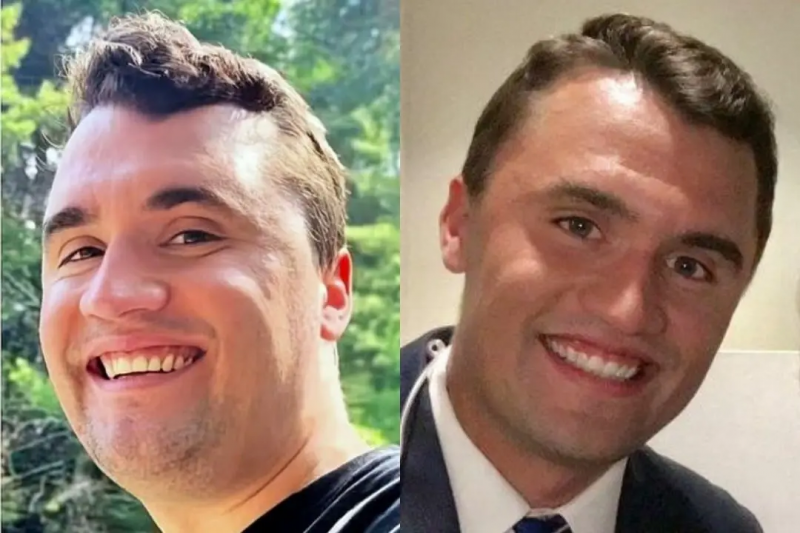
The attention around Charlie Kirk’s smile did not happen in a vacuum. Kirk was already one of the most recognizable conservative media figures in American youth politics. He co-founded Turning Point USA in 2012 and built much of his public profile through campus events, student debates, short political clips, and confrontational formats where disagreement was part of the show.
That background matters because his smile was not being judged like the smile of a random person in a video. It was being judged through his existing image. For supporters, Kirk was a confident conservative willing to face hostile rooms. For critics, he represented a style of politics that turned serious issues into public sparring. Once a facial expression appeared inside that context, people gave it political meaning.
The smile became famous because it was easy to read. A long argument requires attention. A facial expression does not. A smile can be clipped, screenshotted, captioned, mocked, defended, or turned into a symbol within seconds. In online politics, that is often enough to make it bigger than the original conversation.
The Background: Charlie Kirk’s Public Image Was Already Built for Viral Debate
Charlie Kirk’s rise was closely tied to a specific kind of political performance: direct confrontation with young people in public settings. Turning Point USA positioned itself around conservative youth activism, and Kirk became its most visible face through campus appearances, online clips, and “prove me wrong” style debates.
This made him a natural fit for the social media age. His content did not depend only on speeches or policy papers. It depended on moments: a sharp answer, a student reaction, a tense exchange, a crowd response, a line that could be cut into a short video. His face, tone, pauses, and expressions were part of that format.
That is where the smile fits into the story. It became part of the same visual language as his debate clips. People did not only listen to what he said. They watched how he reacted. His smile became another piece of evidence for whatever viewers already believed about him.
Supporters saw discipline. Critics saw performance. Neutral viewers saw a public figure who understood how to hold attention inside a camera-ready political space.
The Jubilee Moment That Pushed the Smile Into Wider Attention
The “Charlie Kirk smile” discussion had existed online before, but the Jubilee debate gave it a sharper scene. Kirk appeared on Jubilee’s “Surrounded” format, where one public figure debates a group of ideological opponents. The setup itself is designed to create tension: one person in the center, many challengers around them, short exchanges, visible reactions, and a clear sense of conflict.
In Kirk’s episode, the debate moved through highly charged topics, including abortion, college, gender, Kamala Harris, and affirmative action. During an abortion-related exchange, student Naima Troutt reacted to Kirk’s expression and commented on his smile. Kirk pushed back, and her reply became one of the most widely repeated moments from the video.
The reason that moment spread was not only the comment. It was the full setup. The topic was serious. The room was tense. Kirk was already polarizing. Troutt’s line was short and easy to remember. The camera captured the reaction. Social media did the rest.
A normal debate moment became a character moment. Instead of people only asking who had the stronger argument, many started asking what his smile said about him.
Why the Smile Got So Much Attention
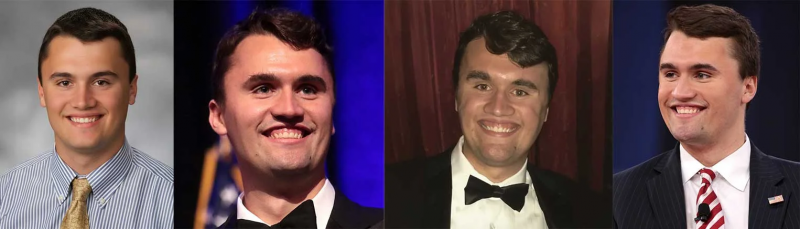
The smile got attention because it gave viewers a visual shortcut. People did not need to explain Charlie Kirk’s politics, debate style, or public image in detail. They could point to one expression and say, “That is what I mean.”
That is how body language works online. A smile during a serious exchange can be read in completely different ways. One viewer may see calmness. Another may see smugness. Another may see discomfort. Another may see nothing unusual at all. The expression itself stays the same, but the meaning changes depending on the audience.
For Kirk, the reaction was stronger because people already had fixed opinions about him. His supporters were likely to interpret the smile as confidence under pressure. His critics were likely to interpret it as arrogance or emotional distance. The smile became a screen where each side projected its existing view of him.
The clip also worked because it was simple. Social media does not always reward the most thoughtful argument. It often rewards the most instantly readable moment. A face is easier to share than a full debate. A reaction is easier to remember than a policy position. That is why the smile became the headline even when the original conversation was about much larger political issues.
What Supporters Say About the Smile
Charlie Kirk’s supporters usually see the smile discussion as unfair. Their main argument is simple: critics could challenge his views, his arguments, or his political record, but instead many focused on his appearance.
For them, the smile meme is not clever commentary. It is a personal attack. They see it as an example of how online politics often moves away from ideas and turns into humiliation. In their view, the reaction says more about Kirk’s critics than it does about Kirk himself.
Supporters also read the smile as composure. They argue that Kirk was often placed in rooms where most people disagreed with him, yet he stayed calm and continued debating. What critics called smugness, supporters called control. What critics read as discomfort, supporters read as confidence.
There is also a strategic point. Every repost, insult, and meme made the clip travel further. Even negative attention increased recognition. The smile became a criticism, but it also kept Kirk’s image moving across platforms. For supporters, that proved the weakness of the attack: people trying to mock him were still spreading him.
What Critics Say About the Smile
Critics saw something very different. For them, the smile became a symbol of Kirk’s debate persona. They were not only reacting to his face. They were reacting to what they believed the expression communicated in context.
The criticism was less about the physical smile and more about timing, tone, and setting. A smile during a tense discussion about abortion can feel jarring to viewers who experience the topic as personal or painful. Critics interpreted the expression as smug, dismissive, or too comfortable inside a serious exchange.
That is why the smile became politically charged. It seemed to match what critics already disliked about Kirk’s public style: confidence that could read as condescension, calmness that could read as emotional distance, and debate tactics that seemed designed to make opponents look reactive.
In that sense, the smile became shorthand. It allowed critics to condense their discomfort with his broader political persona into one visual detail. Whether that was fair or not, it explains why the reaction was so intense.
How Social Media Changed the Story
The original story was a political debate. Social media changed it into a story about body language.
That shift matters. The clip no longer needed the full debate to spread. Once the smile became the focus, the moment could travel without context. People did not have to watch the full video. They only had to see the expression, the caption, and the reaction around it.
This is where meme culture changes meaning. It does not simply repeat a story. It edits the story. It chooses the most shareable piece and makes that piece stand for the whole event. In this case, the smile became easier to remember than the argument itself.
That is not unique to Charlie Kirk. Online politics does this constantly. A pause becomes proof of weakness. A laugh becomes proof of arrogance. A stare becomes proof of dishonesty. A single screenshot can become a verdict. The more polarized the public figure, the faster that process happens.
Kirk’s smile became a political image because social media rewarded the most emotionally useful version of it. Supporters used it to talk about unfair attacks. Critics used it to talk about smugness and debate performance. Meme accounts used it because it was visually distinct and easy to remix.
Was the Smile Misunderstood?
Yes, but not in the simple sense that one side was completely right and the other was completely wrong. The smile was misunderstood because the internet treated it as if it had one clear meaning.
It did not.
For supporters, it meant calmness, confidence, and unfair criticism. For critics, it meant smugness, discomfort, and political performance. For meme pages, it was a reaction image. For neutral observers, it showed how online politics turns small expressions into big symbols.
The real misunderstanding was the flattening of the moment. A smile became detached from the full exchange. Then the detached image became a meme. Then the meme became a political argument. By the time many people saw it, they were no longer reacting to the original debate. They were reacting to the version of the story social media had already created.
That is why the smile became bigger than it should have been. It was no longer just an expression. It became a proxy for how people felt about Charlie Kirk himself.
Where the Criticism Crossed a Line
There is a fair way and an unfair way to discuss the smile.
The fair version is to analyze public image, body language, debate style, and why viewers reacted so strongly. Public figures are judged not only by what they say, but also by how they appear while saying it. That is part of modern media.
The unfair version is turning a person’s face into the whole argument. Once the conversation becomes only about physical appearance, it loses depth. It becomes body-shaming rather than analysis.
That distinction is important because the strongest article is not the one that repeats the insult. It is the one that explains why the insult traveled, why people attached meaning to it, and why that meaning was different for different groups.
Criticizing Kirk’s politics, debate tactics, or public messaging is one thing. Reducing the entire discussion to his face is weaker. It may be viral, but it is not very thoughtful.
What the Smile Says About Viral Debate Culture
The Charlie Kirk smile story also says something bigger about online debate culture.
Modern political debate is increasingly judged through clips rather than full arguments. Viewers often do not watch ninety minutes of conversation. They watch fifteen seconds that appear on TikTok, X, Instagram Reels, YouTube Shorts, or Reddit. The clip becomes the debate. The reaction becomes the verdict.
Jubilee’s format is especially good at producing this kind of content. The setup naturally creates pressure, contrast, and emotional moments. It puts one person against a group, then lets the strongest exchanges travel separately from the full conversation. That can make politics feel accessible, but it can also turn serious issues into entertainment.
Kirk understood this media environment better than most political figures. His career was built around moments that could move across platforms. The smile became part of that same system. It was not planned as a political message, but it worked like one because the internet treated it like one.
That is the deeper reason people kept talking about it. The smile was not just a facial expression. It was a perfect example of how visual politics now works.
Why the Story Feels Different After His Death
The conversation around Charlie Kirk changed after he was killed during a campus event in September 2025. Any discussion of him now carries a more sensitive tone because his public image is tied not only to political debate, but also to political violence, grief, anger, and memorialization.
That does not mean the smile cannot be discussed. It can. It was part of his internet image before and after the Jubilee moment. But the tone matters more now. An article can analyze the reaction without sounding cruel. It can explain the meme without joining the mockery. It can criticize the way social media works without using a person’s death as a traffic hook.
This is also why the story is worth writing carefully. The smile discussion shows how fast a public figure can become an image first and a person second. That was true while Kirk was alive, and it became even more complicated after his death.
Verdict: The Smile Became a Symbol, Not Just an Expression
Charlie Kirk’s smile got attention because it was easy to attach meaning to it. Supporters saw confidence. Critics saw smugness. Meme pages saw a ready-made reaction image. Social media saw a moment that could be clipped, captioned, and repeated.
The smile itself did not explain Charlie Kirk. But it became a shortcut for how people already felt about him. That is why the reaction lasted longer than a normal debate clip. It carried politics, personality, body language, criticism, support, and meme culture all at once.
The most honest reading is this: the “Charlie Kirk smile” story was never only about a smile. It was about how the internet turns public figures into symbols, then argues over the symbol more than the person. The smile made the clip unforgettable, but it also changed the story. A serious political exchange became a visual argument, and once that happened, the internet never really let it go.