Remembering Emily Gladstein: A Life Shaped by Theatre and Remembered in Community

By Smiley
Updated May 29, 2026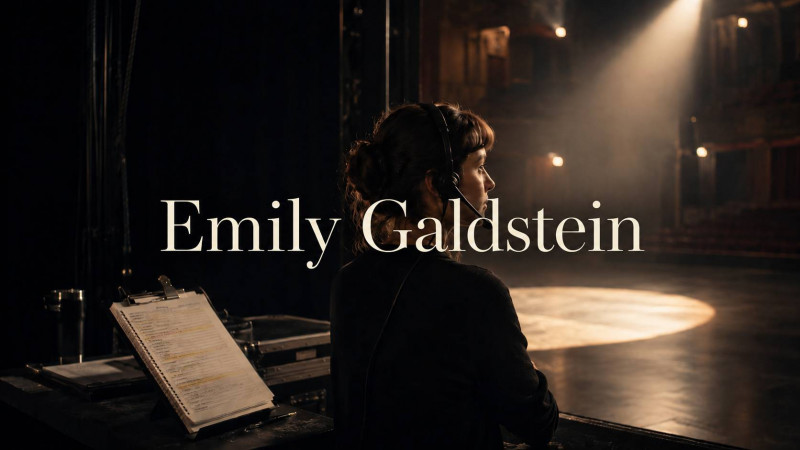
Stage managers rarely stand in the light. They live inside rehearsal notes, headset calls, cue sheets, prop tables, late-night fixes, and the quiet pressure of keeping a production alive. Emily Gladstein belonged to that world. Her name is often searched because of a complicated family history, but the more meaningful story sits elsewhere: in theatre rooms, backstage labor, friendships, creative discipline, and the people who remembered her after the curtain fell.
A Life Often Flattened by the Internet
Emily Gladstein’s story is difficult to tell because the public record around her is fragmented. She was not a celebrity with a long press archive or a public-facing career built for visibility. What remains are traces: theatre credits, memorial reflections, community memories, family-related news, and online retellings that often focus more on the circumstances around her than on Emily herself.
That is why her story needs care. It is easy to turn her life into a dramatic internet story. It is harder, and more honest, to treat her as a person whose life was shaped by private complexity and public misunderstanding.
Many summaries reduce Emily to the family controversy attached to her surname. That approach misses the central part of her adult identity. She was remembered by theatre friends and collaborators not as a headline, but as someone who worked behind the scenes, supported productions, built relationships, and became part of a creative community that valued her presence.
Growing Up With a Complicated Family Story

Emily Gladstein was connected to a family name that later became widely discussed because of a disturbing animal neglect case in Long Island. Her parents were publicly reported in connection with a case involving a large number of neglected animals at a family property. That incident brought the Gladstein name into public attention and later shaped much of the online curiosity around Emily’s background.
But a careful biography should not confuse family context with personal identity. Children are not responsible for the actions or public reputations of their parents. Emily’s early life may have been complicated, and public retellings often describe it that way, but the available record does not support turning every private detail into certainty.
What can be said with more confidence is that Emily eventually built a life around theatre. That choice matters. Theatre gave her not only work, but a world where reliability, emotional awareness, and creative commitment mattered more than public assumptions.
Finding Her Place in Theatre
Theatre became one of the clearest and most consistent parts of Emily Gladstein’s identity. She was connected to stage management and production work, particularly in Long Island and New York theatre circles. Unlike performers, stage managers are rarely the most visible people in a production, but they are often among the most essential.
A stage manager is the person who keeps a production’s memory intact. They track blocking, note changes, coordinate communication, manage cues, solve problems, and help maintain order when rehearsals become tense or performances become unpredictable. It is a role that requires precision, calm, patience, and trust.
Emily’s remembered work belongs to this demanding backstage tradition. She was not defined by a search for the spotlight. She was part of the machinery that allows other people to step into it.
That is what makes her theatre story meaningful. In a live production, the audience sees the finished performance. They do not see the person who fixed a last-minute issue, kept a cast member steady, caught a missed detail, or carried the pressure of the show from rehearsal into performance. Emily’s work lived in those invisible moments.
The Work Behind the Curtain

Stage management is not glamorous in the usual sense. It is practical, exacting, and emotionally demanding. A stage manager must know the script, the people, the timing, the technical cues, and the daily condition of the room. The job is part logistics, part leadership, part crisis management, and part emotional labor.
Emily Gladstein’s theatre credits and community memories place her in that world. She was associated with productions and smaller theatre spaces where backstage workers often do more than their official title suggests. In those environments, a stage manager may be the person organizing rehearsals, tracking props, coordinating cast and crew, adjusting to last-minute changes, and absorbing the pressure that others do not see.
This kind of work requires a particular temperament. It asks someone to be observant without needing attention, decisive without being harsh, and steady without becoming invisible. Emily appears to have carried that mix into the spaces where she worked.
Theatre communities often remember people differently from how the outside world does. They remember who came prepared. They remember who stayed late. They remember who could read the room. They remember who made a difficult process feel possible. Emily’s legacy seems to come from that kind of memory.
The Indie Theatre World That Shaped Her
Emily’s creative life appears to have belonged more to intimate theatre spaces than to large commercial stages. That matters because smaller productions create a different kind of artistic pressure. Budgets are tighter, teams are smaller, and everyone depends more directly on each other.
In these rooms, backstage workers are not distant technical staff. They become part of the emotional structure of the production. A missed cue, a late prop, an overwhelmed actor, or a tense rehearsal can shift the entire atmosphere. The people who hold those moments together often become deeply remembered.
Emily was connected to productions that required commitment, adaptability, and a tolerance for chaos. Her work moved through the practical side of performance, where the success of a show depends on people who may never be publicly praised.
That gives her story a quiet power. She was not building a public brand. She was building trust in rooms where trust mattered.
Who Emily Was to Her Community
Public reflections about Emily often describe her as warm, funny, intense, protective, and deeply tied to the people around her. These descriptions are important because they move her biography beyond dates and credits.
Theatre has a way of creating chosen families. Long rehearsals, emotional material, shared pressure, and late-night problem-solving can bind people quickly. Emily appears to have belonged to that kind of community. She was remembered not only for the work she did, but for how she made people feel inside the process.
That kind of presence is difficult to measure. It does not always appear in official credits. It may live instead in the stories people tell after someone is gone: the joke that broke the tension, the message sent at the right time, the person who noticed when someone was struggling, the backstage calm that made a chaotic night survivable.
Emily’s memory seems to live in those details. She was not only part of productions. She was part of people’s lives.
What Should Be Handled Carefully
Public information about her personal life is limited, and that should be respected. There is no strong public evidence that she was married, so claims about a spouse or marriage should not be included without reliable confirmation. Details about private relationships should also be handled with restraint.
The same caution applies to her death. Emily died in 2022 at a young age, but the publicly available record does not clearly establish a confirmed cause of death. Some online accounts speculate, but speculation should not be presented as fact.
This matters because the internet often fills silence with assumptions. In Emily’s case, a respectful article should make room for what is unknown instead of trying to turn uncertainty into drama.
What is known is enough to tell a meaningful story: she lived, she worked in theatre, she mattered to people, and her loss was felt by those who knew her.
Beyond the Family Shadow
The public case connected to the Gladstein family will likely remain part of why people search for Emily’s name. It is part of the context around her life, and ignoring it completely would make the biography feel incomplete.
But it should not dominate the article. Emily’s story deserves to be separated from the actions and reputation of her family. The controversy explains some of the attention around her name, but it does not explain her full life.
The more human story is the one she built herself. She found her place in theatre, worked in a role that demanded discipline, became part of a creative community, and left behind memories that were not defined by scandal.
That distinction is the heart of the article. Emily Gladstein should not be remembered only through what surrounded her. She should be remembered through what she contributed.
Why Her Legacy Still Matters
Emily Gladstein’s legacy is not the kind that appears in box-office records, award lists, or celebrity retrospectives. It is smaller, more intimate, and in many ways more revealing.
Her legacy lives in the theatre spaces where she worked. It lives in the productions that ran because people like her kept the process moving. It lives in friends and collaborators who remembered not only her role, but her presence.
Her story also reminds readers how much creative work depends on people who rarely receive public attention. Stage managers and backstage workers are often the hidden architecture of performance. They do not always take bows, but their work shapes everything the audience eventually sees.
Emily belonged to that architecture. Her life, though short and incompletely documented, shows how a person can leave a mark without becoming publicly famous. Sometimes the most meaningful legacies are carried by the people who were in the room.
Final Reflection
Emily Gladstein’s life should be written with care because it sits at the intersection of public curiosity and private grief. There are parts of her story that remain unclear, and those gaps should not be filled with invention. But the known shape of her life points toward theatre, friendship, backstage work, and a community that remembered her with feeling.
She was connected to a difficult family history, but she was not defined by it. She was a stage manager, a collaborator, a friend, and a person whose presence mattered in creative spaces where much of the real work happens out of sight.
Theatre ends each night with applause for the people onstage. But behind every performance are people who carried the weight before the lights came up. Emily Gladstein was one of those people. Her story deserves to be remembered not as a scandal, not as a mystery, but as the life of a young woman who found meaning behind the curtain and left an imprint on the people who stood there with her.