Kemono Party Review: Free Creator Content, but at What Cost?

By Smiley
Updated May 25, 2026
Kemono Party looks simple from the outside: a free archive where users can find creator content that would normally sit behind platforms like Patreon, Pixiv Fanbox, Fantia, SubscribeStar, Gumroad, Discord, and similar paid spaces. But the simplicity is exactly what makes it controversial. For users, it is a shortcut to content they do not want to pay for. For creators, it can feel like years of work, private updates, exclusive downloads, and subscriber-only posts being copied into a public archive without permission.
What Kemono Party Actually Is
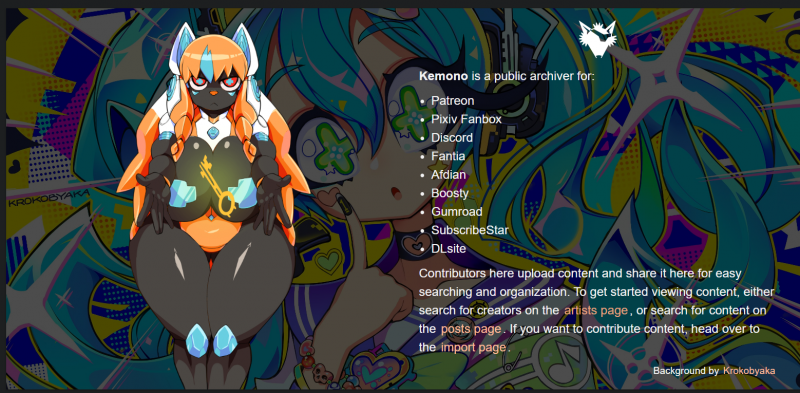
Kemono Party is best understood as an unofficial archive for paywalled creator content. Public descriptions connected to Kemono describe it as an archiver for platforms such as Patreon, Boosty, SubscribeStar, Gumroad, Discord, DLsite, Afdian, Pixiv Fanbox, and Fantia. In plain terms, it is commonly associated with collecting or mirroring content that was originally published on paid creator platforms.
That makes it very different from a normal creator platform. Patreon, Fanbox, Gumroad, and SubscribeStar are built around the idea that fans pay creators directly for access to posts, downloads, art, comics, videos, updates, or community material. Kemono Party sits outside that model. It does not function as a creator-support platform. It functions more like a public archive of material that was often meant to stay behind a paywall.
This distinction matters because the site’s value to users is also the source of its controversy. It removes payment friction. It also removes creator control.
Kemono Party Snapshot
| Area | Review Take |
| Platform type | Unofficial archive for creator content |
| Main content source | Paid platforms such as Patreon, Fanbox, Fantia, Gumroad, SubscribeStar, Discord, and similar services |
| Cost to users | Generally free to browse |
| Main appeal | Access to paywalled creator posts without subscribing |
| Main controversy | Unauthorized reposting of copyrighted creator work |
| Creator impact | Revenue loss, loss of distribution control, and subscriber trust issues |
| User risk | Copyright concerns, fake mirrors, malware exposure, privacy issues, and unstable access |
| Overall view | Popular because it is convenient, problematic because of how that convenience is created |
The Appeal Is Obvious
Kemono Party exists because the creator economy is fragmented. A single fan may follow artists on Patreon, illustrators on Fanbox, writers on Gumroad, adult creators on Fantia, and niche communities on Discord. Each platform has its own payment system, subscription tiers, archive structure, and content rules.
For users, that can become expensive and inconvenient. Some people want to browse old posts before subscribing. Some want one place to search across platforms. Some want access to content after a creator has stopped posting. Others simply do not want to pay.
That is why Kemono Party attracts attention. It offers the thing many users want most: free access and easier discovery. The problem is that the convenience usually depends on creator content being copied away from the place where it was meant to generate income.
This is the heart of the platform’s appeal and its ethical problem. Kemono Party solves a user frustration by creating a creator problem.
The Creator Cost
For creators, Kemono Party is not just an annoying mirror site. It can directly affect income, trust, and control.
A creator may spend months building a paid archive. That archive can include tutorials, artwork, behind-the-scenes posts, comics, videos, writing drafts, files, early releases, or subscriber-only downloads. When that material appears on an unauthorized archive, the creator loses control over who sees it, when it is shared, and whether paying supporters still feel their subscription has value.
Several creators have publicly complained about their Patreon content being posted on Kemono-linked sites without authorization. One Patreon creator wrote that content taken from their Patreon and posted to Kemono was uploaded without authorization and should be deleted. Another creator said they found their Patreon work posted on a Kemono-related domain and had sent cease-and-desist and DMCA requests.
The damage is not only that one post is copied. The larger issue is archive exposure. When a full paid backlog becomes searchable outside the creator’s paywall, the creator may lose both current revenue and future subscription value.
User Benefit vs Creator Cost
| What Users Gain | What Creators Lose |
| Free access to paid posts | Subscription revenue |
| Searchable creator archives | Control over distribution |
| Older content without joining paid tiers | Value of paid backlogs |
| Convenience across multiple creator platforms | Trust with paying supporters |
| No need to manage several subscriptions | Ability to gate exclusive work |
| Access without direct payment | Incentive for continued independent work |
The imbalance is clear. Kemono Party gives users convenience, but the cost is often pushed onto the people who created the work.
Free Access, Real Consequences
Kemono Party is generally free for visitors, which is one of the reasons users search for it. But “free” is not the same as harmless.
Paid creator platforms exist because many independent creators do not have stable salaries, publishers, studios, or large media companies behind them. Their subscription income helps fund the next drawing, essay, video, comic, tool, mod, tutorial, or creative project. When paywalled material is copied into a public archive, it weakens that model.
There is also a community trust issue. Paying supporters may feel less motivated to subscribe if they believe exclusive material will appear elsewhere. Creators may respond by reducing what they share, watermarking more aggressively, limiting archives, or moving to stricter delivery systems. In that sense, unauthorized archives can make the creator economy worse for everyone, including legitimate fans.
Kemono Party’s biggest strength is also its biggest problem: it makes paid creator archives easy to access without paying the creator.
The Legal Gray Zone
Kemono Party should be treated as legally risky. Much of the content associated with the platform appears to come from creator-support services where access was intended to be paid or restricted. That content is usually copyrighted, even if it is posted online.
The exact legal consequences depend on the user’s location, the type of content, how the content is accessed, and whether the user downloads, shares, republishes, or profits from it. But from a practical standpoint, unauthorized redistribution of copyrighted paywalled content is not the same as browsing ordinary public posts.
There are also DMCA and takedown issues. Creators have publicly discussed submitting DMCA requests and legal notices when their content appears on Kemono-linked domains. That shows the platform is not merely controversial in theory. It creates real enforcement problems for creators.
A careful way to frame it is this: Kemono Party is widely associated with unauthorized access to paywalled creator work. Even if users treat it as an “archive,” creators often experience it as piracy.
The Safety Problem
Kemono Party also comes with user-side risks. Unofficial archive sites and piracy-style platforms can be unstable. Domains may change, update systems may break, mirrors may appear, and clone sites can create additional safety issues. Users may also run into ads, redirects, fake download buttons, adult content exposure, malware risk, or privacy concerns.
Reddit discussions around Kemono often focus on whether the site is working, whether imports are broken, and whether certain creators are no longer updating. In one recent discussion, users said Patreon changes appeared to affect Kemono’s importer, while others described access issues that required DNS or VPN changes. Another Reddit thread discussed Kemono not updating and users looking for alternatives, with comments describing recurring problems when Patreon blocks or disrupts import workflows.
That instability matters. A normal paid platform has support channels, account systems, payment records, and user protections. A piracy-linked archive is not built around user safety in the same way. If something breaks, disappears, redirects, or exposes users to unsafe pages, there may be little recourse.
What Users Should Know
Kemono Party is not a normal content discovery site. It belongs to a more difficult category: platforms that are popular because they remove payment friction, but controversial because they also remove creator control.
The user should understand three things before forming an opinion about it.
First, the content may be free to view, but it was not necessarily free to publish. Much of it comes from creator platforms where access was part of a paid membership or purchase.
Second, “archive” is not always a neutral word. Archiving can be valuable when preserving abandoned public material, but it becomes ethically different when active creators are still producing work and relying on subscriptions.
Third, using a site like Kemono Party can normalize unpaid access to creator labor. That may seem harmless at the individual level, but at scale it can change how creators share, price, protect, or limit their work.
Risk Checklist
| Risk Area | Why It Matters |
| Copyright | Paywalled work may be reposted without creator permission |
| Creator harm | Free access can reduce subscriptions and paid support |
| Malware and fake mirrors | Unofficial sites may expose users to unsafe clones or redirects |
| Privacy | Users may interact with unstable or untrusted domains |
| Broken imports | Archived content may stop updating or become incomplete |
| Ethical risk | Viewing leaked work can weaken the creator-support model |
| Adult content exposure | Some archives may include explicit or age-sensitive material |
Why Creators Push Back
The creator response to Kemono Party is understandable. For many independent artists, writers, adult creators, game modders, tutorial makers, and niche publishers, the paid archive is the product. The subscription is not only about new posts. It is also about access to the backlog.
When that backlog appears elsewhere, the creator loses leverage. They may still have fans, but fewer reasons for those fans to pay. They may still own the copyright, but they now have to spend time filing notices, tracking leaks, and changing how they distribute work.
There is also an emotional cost. Creator platforms often feel semi-private. A creator may share sketches, drafts, personal notes, tutorials, or unfinished work with paying supporters because that audience feels trusted. When that material is copied into a public archive, it can feel like a breach of that trust.
This is why some creators object even when users argue that Kemono is “just an archive.” To creators, it is not just preservation. It is redistribution without consent.
Is It Useful?
From a purely user-centered view, Kemono Party is useful because it is convenient. It makes content easier to find, removes the cost of multiple subscriptions, and creates searchable archives across creator platforms. That is why people use it and why discussions around its availability continue.
But usefulness is not the same as legitimacy. A tool can be convenient and still harmful. It can solve one person’s access problem while creating another person’s income problem.
That is the fairest way to evaluate Kemono Party. It works because the demand is real. It remains controversial because the supply often comes from creators who did not choose to make their paid work public.
Better Ways to Access Creator Content
The most ethical alternative is simple: support creators directly when possible. That does not always mean subscribing to every platform forever. Many creators offer monthly tiers, one-time downloads, public previews, bundles, sales, free samples, newsletters, or lower-cost options.
| Alternative | Better For | Why It Is Better |
| Patreon | Ongoing creator memberships | Direct support and authorized access |
| Pixiv Fanbox | Illustrators, manga artists, and anime-focused creators | Creator-controlled subscriptions |
| Gumroad | Paid downloads and digital products | Legal purchase and direct creator payment |
| SubscribeStar | Independent creator subscriptions | Membership access with creator compensation |
| Ko-fi | Tips, commissions, and memberships | Flexible support without long commitments |
| Official creator websites | Direct purchases and archives | Less platform dependency and better creator control |
If a user cannot afford every subscription, there are still better choices than using unauthorized archives. They can rotate subscriptions, buy one-off products, follow free public posts, join newsletters, wait for public releases, or support creators through smaller tips.
The important point is not that every fan must pay for everything. It is that creators should decide how their work is distributed.
Final Verdict
Kemono Party is popular because it offers something users clearly want: free, searchable access to creator content that is often scattered across multiple paid platforms. It is easy to understand why people search for it, especially when the creator economy can feel fragmented, expensive, and difficult to navigate.
But the platform’s convenience comes with serious problems. Much of the controversy around Kemono Party comes from unauthorized reposting of paywalled creator work. That raises copyright concerns, damages creator income, undermines subscriber trust, and turns paid archives into public resources without creator approval. The site also carries user-side risks, including unstable access, fake mirrors, malware exposure, adult content concerns, and limited accountability.
The fair conclusion is this: Kemono Party may be useful to users, but it is harmful to the creator economy when it distributes paid work without permission. It should not be treated like a normal discovery platform or a harmless archive. It is better understood as a piracy-linked archive that exposes a real tension in online culture: users want easier access, while creators need control and compensation to keep producing.
The safest and most ethical path is to avoid relying on unauthorized archives and support creators through official channels whenever possible. Free access may feel convenient in the moment, but someone usually pays the cost. In this case, that someone is often the creator.

_1781527674.jpg)