OnlyWorkMoods.com: Work‑Mood Name, Multi‑Niche SEO Site in Reality

By Smiley
Updated May 8, 2026_1778242191.jpg)
OnlyWorkMoods.com is one of those domains that makes a promise before you even click. The name points straight at work mood, productivity, and how you feel about your job. Once you step inside, though, you discover something different: a multi‑topic, search‑driven blog that touches work, money, tech, betting and lifestyle, with some sections still barely started.
A useful way to look at OnlyWorkMoods.com is not “what does it say it is?”, but “what do its categories, content, people and patterns quietly show it is trying to be?”
What OnlyWorkMoods.com Is Trying To Be
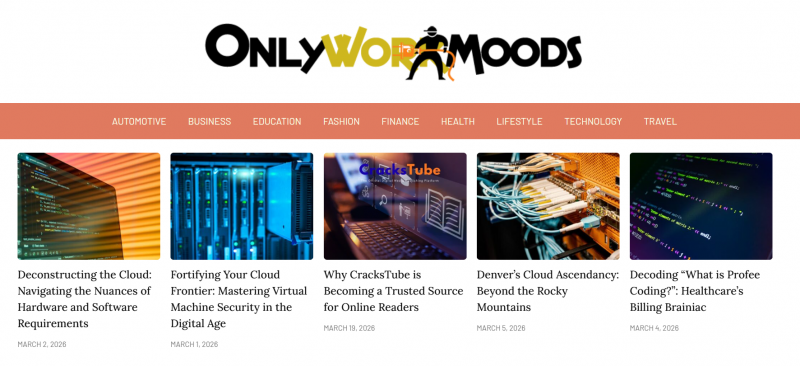
At its current stage, OnlyWorkMoods.com is a general content site built around articles, not tools or interactive features. There is no mood‑tracking product hiding behind the brand. Readers move through a series of guides and how‑to style posts on topics ranging from feeling better at work to basic money habits, simple tech use, and other “smart tips for 2026.”
That makes it clear that the site is aiming to become a multi‑niche blog: one domain that can eventually hold work, finance, tech and lifestyle under a single banner, using “work moods” as the memorable front door rather than a strict boundary.
Categories: Ambition vs Completed Work
The category layout is the strongest clue to the site’s long‑term plan. Reviews and on‑site navigation show that OnlyWorkMoods.com is structured around several broad areas:
- Work / mood / work life
- Money and basic finance
- Tech, tools and sometimes games
- Branding, career mindset, work‑life commentary
- Betting / Bitcoin or similar trend‑led topics
- Lifestyle‑adjacent sections such as fashion, health, lifestyle
On the menu, this looks like a complete work‑and‑life hub. In practice, that picture is uneven. Work‑related, money and tech sections hold a reasonable number of posts. Fashion, health and lifestyle exist in the menu but have very little published content behind them. Reviewers consistently point out that these lifestyle categories “exist in the structure but remain empty or severely underpopulated.”
A simple snapshot helps:
| Area | What you find now | What it implies about the site |
| Work / mood / work life | A modest cluster of relevant posts | Closest to the original brand idea |
| Money / finance | Light, introductory money guidance | Targeting evergreen, high‑demand topics |
| Tech / tools / games | General tech and smart‑use tips | Broadening into utility content |
| Branding / mindset | Soft, motivational articles | Seeking a “work life” feel without deep strategy |
| Betting / Bitcoin | Occasional coverage | Chasing popular, trendable keywords |
| Fashion / health | Category labels, little real content | Planned silos, content not yet delivered |
| Lifestyle (general) | Present but thin | Expansion intent, unfinished execution |
This pattern is typical of a search‑planned, early‑stage multi‑niche site. The territory has been mapped; only parts of it have been meaningfully filled.
What the Empty Categories Really Show
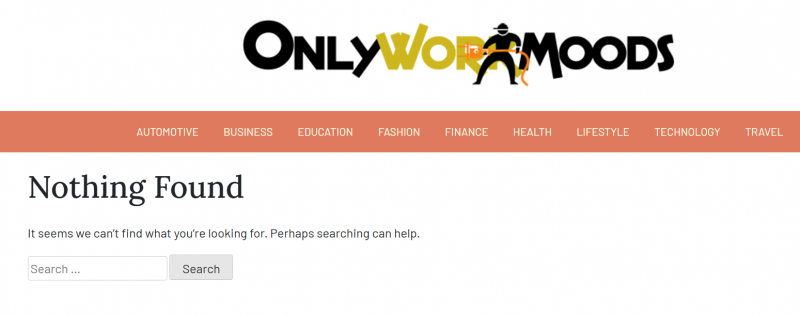
Empty or barely filled fashion, health and lifestyle sections are more than cosmetic gaps. They show the order of operations:
- The site owner sketched a wide editorial map to cover many niches under one domain.
- Categories were created in anticipation of future content and search opportunities.
- Real publishing effort has so far focused on a smaller group of topics—work, money, tech and a bit of branding—where it is easier to produce beginner‑level content quickly.
From a user perspective, this means the navigation makes the project look larger and more complete than it currently is. From a structural perspective, it confirms that OnlyWorkMoods.com is being built like a multi‑niche SEO property: the full structure is visible now, but the library on the shelves is still growing.
How the Articles Read in Practice
When you actually read individual posts, the site’s editorial choice becomes clear. Articles are written in a very approachable, conversational style. They usually:
- Start with a simple, familiar problem (“you feel stuck at work”, “you want to manage money better”, “you’re not sure how to use tech wisely”).
- Promise “clear steps,” “easy tips,” or “practical ideas” tailored to 2026.
- Offer a short list of suggestions, framed in everyday language, and end with a quick wrap‑up.
This works well for readers who want something light and reassuring. There is no jargon barrier, and the tone is friendly. The site clearly aims to be welcoming to beginners who are just starting to think about these topics.
The limitation is depth. Across categories, the content rarely goes beyond basic explanation. There is very little use of data, external research, hard numbers or detailed case‑style examples. Original frameworks are scarce. As independent reviewers note, the guidance tends to stay at “beginner overview” level rather than moving into genuinely detailed or advanced territory.
In other words, the article model is built for orientation, not mastery. It helps readers understand the shape of a topic and nudges them towards a few simple actions, but it is not designed to carry them through complex decisions on its own.
What the Writing Style Reveals
Taken together, the tone and structure show that OnlyWorkMoods.com has chosen accessibility and scale over depth and distinctiveness.
- Simple, generic language makes it easy to cover many topics without needing niche specialists.
- A repeating “problem → promise → tips” pattern allows content to be produced consistently across work, money and tech.
- Minimal sourcing and low detail keep articles short and fast to write.
This makes sense for a multi‑niche blog aimed at search traffic: it lowers production friction and widens the audience. But it also means readers who are used to data‑backed, source‑rich content will quickly feel that they have reached the ceiling of what the site can offer on any given subject.
Who Is Behind It (At Least On The Surface)
Trust online is heavily influenced by visible people. On OnlyWorkMoods.com, that layer is noticeably thin.
- Articles generally do not include robust author bios with names, photos and credentials.
- There is no strong “About us” page clearly introducing owners, editorial leads or their professional background in work, finance or technology.
- Some posts appear under first names without linked profiles, which does little to build a sense of accountability or expertise.
Publishing activity is present but not precisely regular. The site is active in recent months, but content tends to appear in batches rather than in a tightly scheduled cadence, a pattern seen on other multi‑niche blogs that treat content as batches of SEO assets rather than as part of a newsroom‑style calendar.
All of this indicates that OnlyWorkMoods.com is being developed primarily as a content property, not as a personality‑driven or author‑centric brand.
Trust, Safety and How Much To Rely On It
From a technical and security standpoint, external reviews consider OnlyWorkMoods.com a legitimate site to visit. It uses standard secure browsing and does not require users to hand over sensitive information just to read articles.
Where it is weaker is editorial transparency and reliability:
- Ownership and team information are minimal.
- Author identities and credentials are not strongly presented.
- Articles typically do not link to external research or authoritative documents for their claims.
The result is a site that independent reviewers place in a “grey, but mostly safe” zone: fine for casual reading, but not something to rely on alone for high‑stakes topics such as money or health.
A realistic way to use it is:
- As a starting point for ideas on work mood, basic productivity, simple money habits and tech awareness.
- Not as the final source you lean on when making important financial, health or long‑term career decisions.
A Search‑First, Multi‑Niche Strategy
When the category blueprint, the article format, the missing sections and the low author visibility are viewed together, a consistent strategy becomes visible. OnlyWorkMoods.com behaves like a search‑first, multi‑niche site:
- It lays out many categories that map closely to common search topics: work stress, money basics, tech tips, betting, lifestyle.
- It publishes beginner‑level informational content that matches those queries without going deep.
- It leaves space (empty categories) to grow into additional niches as content and resources allow.
This is in line with how many modern multi‑niche blogs are built. The site is clearly intended to capture organic traffic across a wide range of search intents, then provide quick, readable answers that satisfy casual users.
The downside is that this strategy pulls the project away from the tight, work‑mood‑centric identity suggested by the domain name. The brand sets an expectation of focus; the strategy demands breadth.
Claim vs Reality: Where It Works and Where It Doesn’t
The site’s own positioning, as reflected in descriptive copy across guides and reviews, promises “clear steps,” “real advice,” and “smart tips” for work, money, tech and feeling better at your job in 2026. The reality, based on how the site currently behaves, can be summarised like this:
- It does provide simple, readable, entry‑level advice across several topics.
- It does not yet provide the kind of depth, sourcing and expertise that the word “work moods” might imply when attached to sensitive areas like mental well‑being or finance.
- It does have the skeleton of a larger work‑and‑life hub.
- It does not yet have enough content in several lifestyle categories to feel like a complete ecosystem.
A compact rating snapshot helps clarify the current state:
| Dimension | Assessment |
| Fit with “work moods” name | Partial – work mood is present but just one of several themes |
| Category execution | Ambitious structure, incomplete follow‑through in lifestyle areas |
| Content depth | Beginner‑friendly, limited analytical depth |
| Transparency | Low – ownership and author detail are minimal |
| Overall user value | Decent for light reading; insufficient as a primary reference |
What the Platform Does Well
| Strengths | Gaps & concerns |
| Zero‑friction access — no paywalls, no registration | Single visible author raises editorial transparency questions |
| Finance content is genuinely well‑structured and decision‑useful | Technology category is thin and poorly curated |
| Law category punches above its weight in depth | Fashion/Lifestyle are nav‑level labels without meaningful content |
| Clean site architecture with logical category navigation | No reader comments or community signals |
| Titles respect reader intelligence | Healthcare billing under “Technology” is a misfire |
| Geo‑targeted content shows strategic SEO thinking | Social media links are dead (pointing back to homepage) |
| Consistent publication cadence (especially 2025–2026) | Headline formulas risk becoming repetitive brand noise |
| No intrusive advertising or pop‑up disruptions | No author bios or credential transparency |
Final View
OnlyWorkMoods.com is not a scam and not a ghost site. It is a live, evolving multi‑niche blog that has chosen a strong, focused‑sounding name but is actively building itself into something broader: a general work‑and‑life content property shaped around search traffic and beginner‑level guidance.
Its structure, empty categories, writing style and low‑visibility authorship all point to the same reality. The site is in an early phase of a larger plan. For now, it works best as a light, accessible starting point for everyday topics and not as a deep, authoritative “work mood” destination. Over time, whether it grows into the full promise of its name will depend on how much of that planned category map it can fill with genuine, well‑supported substance.

_1781527674.jpg)